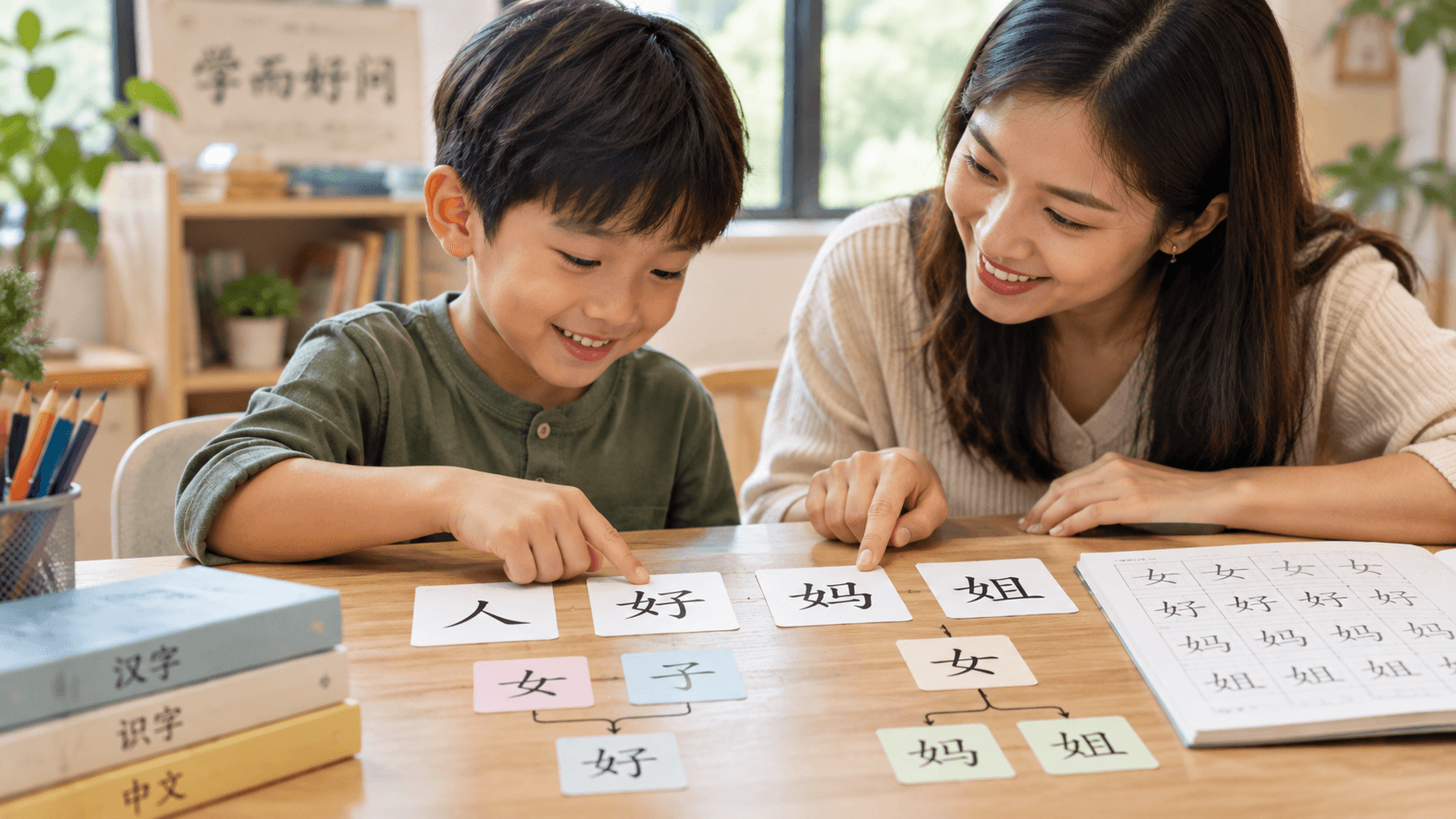
A child comes home and says a Mandarin word.
The parent smiles.
Then comes the awkward question:
“What does that mean?”
For parents who do not speak Mandarin, supporting language learning can sometimes feel difficult. How can you help with homework when you cannot check the pronunciation? What happens when your child already knows more vocabulary than you do?
The answer is simple: you do not need to become the teacher.
Simple Ways to Take Part
Your role at home can be different.
- Ask your child to teach you three words.
- Let them correct your pronunciation.
- Put a Mandarin song from class on during the drive home.
- Ask, “What was the easiest thing you learned today?” and then, “What was confusing?”
- If the teacher provides vocabulary audio, listen together.
These small interactions communicate something important: what the child is learning matters outside the classroom too.
Keep It Regular and Relaxed
Parents can also help establish consistency. Five or ten minutes of reviewing familiar material is easier to maintain than an ambitious home curriculum that disappears after two weeks.
And resist the temptation to turn every Mandarin moment into a test.
Sometimes asking “How do you say apple?” is fun.
Sometimes it is nicer to say, “Teach me something I don't know.”
Language learning is not only about correctness. It is also about confidence, curiosity and a willingness to communicate.
A parent who cannot speak Mandarin can still create an environment where all three are welcome.
Let Your Child Be the Expert
And there is an unexpected bonus.
Your child gets to be the expert for a moment.
That can be a wonderful reason to keep learning.
Sources & further reading
- ACTFL — Benefits of Language Learning
- Education Endowment Foundation — Parental Engagement