

Education · 11 September 2026
Group Work Is Not Automatically Collaborative Learning
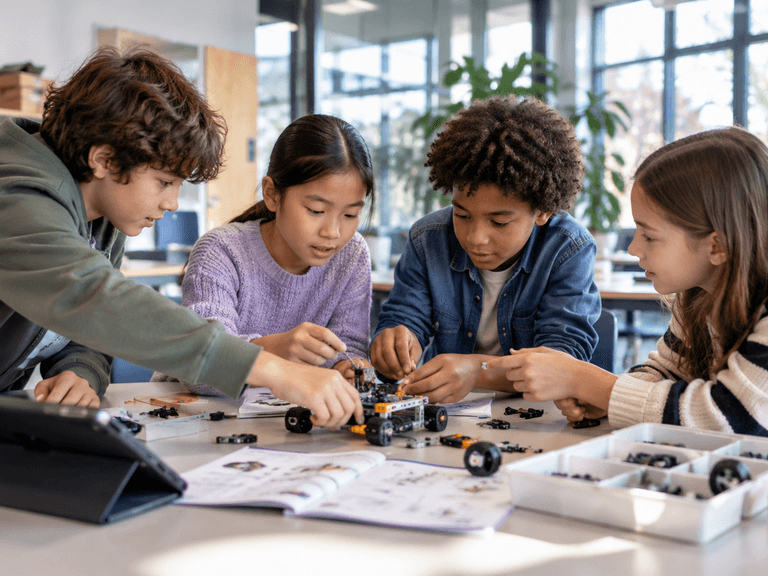
Putting four children at one table creates a group. It does not guarantee that they are learning together.
The most useful feedback helps a learner see the next move.

By ORACLES STUDIOS ·
Imagine receiving a paper covered in red marks.
You know many things are wrong.
You are just not sure what to do next.
Feedback has educational value only when the learner can use it.
Good feedback connects to a goal.
It identifies something important.
And it helps the learner improve.
Compare:
“Your writing is unclear.”
with:
“Your main idea is strong, but this paragraph introduces three ideas at once. Try giving each idea its own sentence first.”
The second version creates a next step.
Feedback also does not need to correct everything simultaneously.
Ten comments can leave a student overwhelmed.
One or two priorities may result in far more actual revision.
Timing matters too.
Feedback delivered after a learner has mentally abandoned the task may be less useful than feedback they can apply while the work is still active.
And learners need opportunities to respond.
Otherwise feedback becomes information the teacher gives and the student files away.
The cycle should look more like:
attempt → feedback → revision → reflection.
That last step matters.
Over time, strong feedback should make students less dependent on feedback, not more.
They begin developing their own internal editor.
Education · 11 September 2026
Putting four children at one table creates a group. It does not guarantee that they are learning together.

Education · 11 September 2026
Children become more independent learners when they learn to notice how they think, plan, check and adjust.
Education · 11 September 2026
Cramming can make tomorrow's test feel easier. Spaced practice is designed for the week, month and year after that.