
ART · 11 September 2026
Open-Ended Art Is Not the Same as “Just Let Them Do Anything”
Creative freedom works best when children have enough structure to begin and enough freedom to make the work their own.
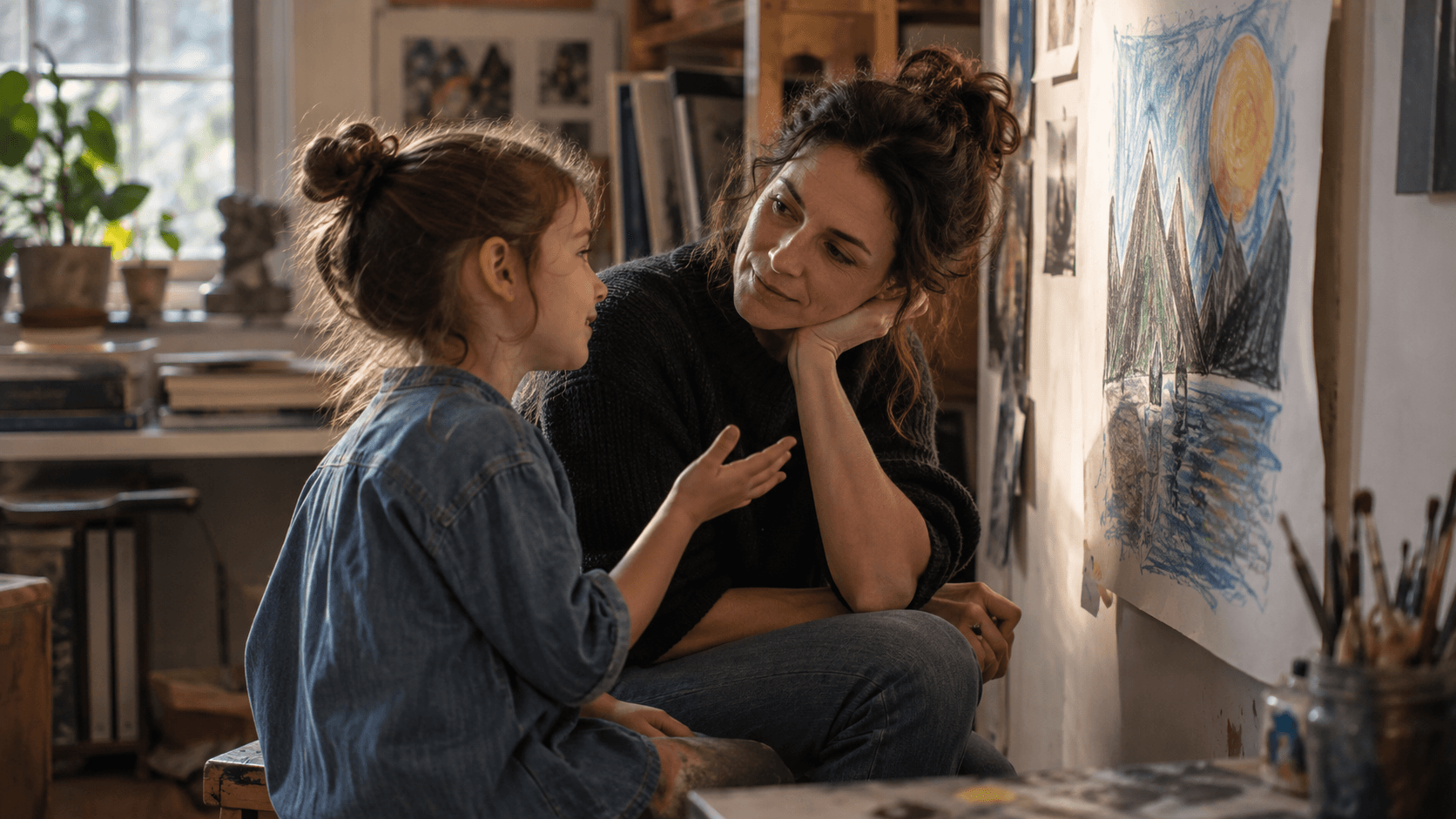
Talking about art can help children move beyond seeking approval and start thinking about choices, ideas and possibilities.
By ORACLES STUDIOS ·
Children often finish an artwork and immediately ask:
“Is it good?”
It is a surprisingly difficult question.
Say yes every time and the answer eventually becomes meaningless.
Start judging everything and art can quickly become an exercise in pleasing adults.
There is another option.
Change the conversation.
This lets the child decide what is important.
Now they are evaluating their own work instead of waiting for your verdict.
This opens a conversation about problem-solving and persistence.
Artists revise. Children should know that changing direction is part of creating, not evidence of failure.
The artwork stops being a final exam. It becomes one step in an ongoing process.
Reflection is one of the habits identified in visual arts education by Harvard Project Zero. Artists do not only make things; they look at what they have made, think about it and decide what comes next.
Parents and teachers can help children develop that habit without turning every picture into an interview.
Sometimes “I love seeing what you made” is enough.
The goal is simply to broaden the vocabulary beyond good and bad, pretty and ugly, correct and wrong.
Art becomes much more interesting when the question changes from:
“Did I do it right?”
to:
“What did I discover?”
ART · 11 September 2026
Creative freedom works best when children have enough structure to begin and enough freedom to make the work their own.
ART · 11 September 2026
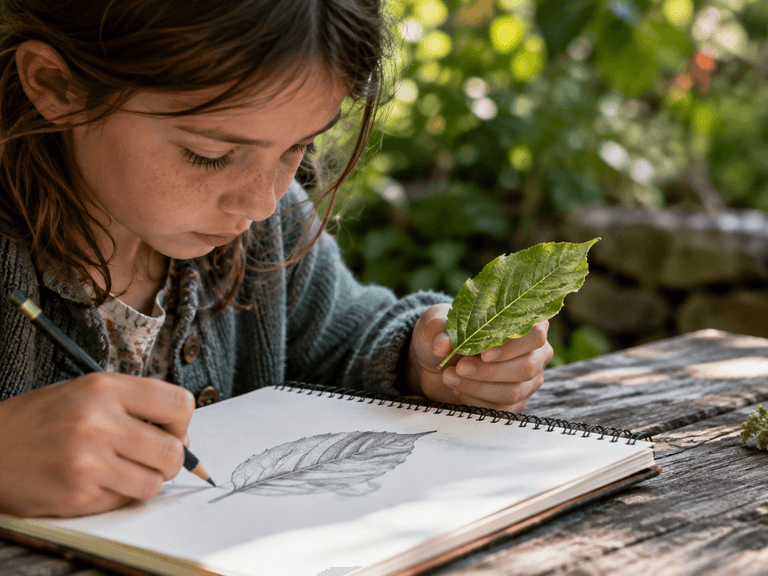
Observation is one of the quiet skills art develops: learning to slow down, look again and notice what was missed the first time.
ART · 11 September 2026
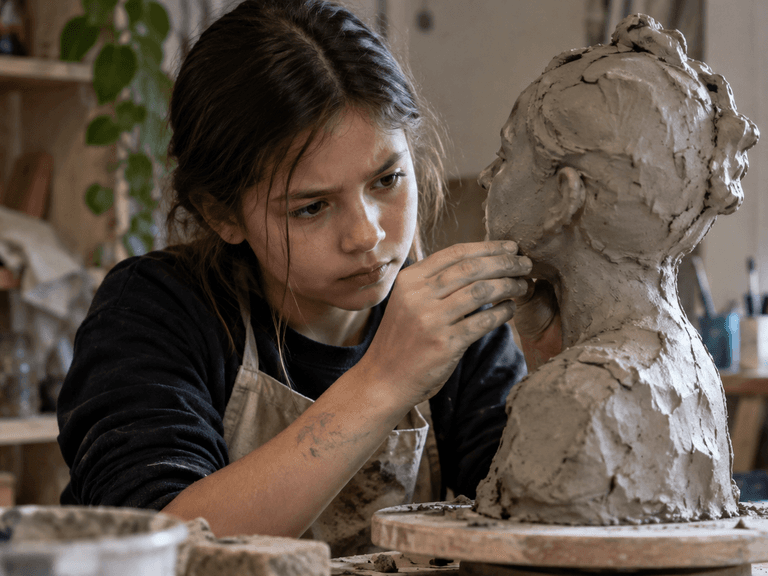
When children encounter a creative problem and stay with it, they practise something art teachers value deeply: engagement and persistence.