
ART · 11 September 2026
Five Better Questions Than “Is My Drawing Good?”
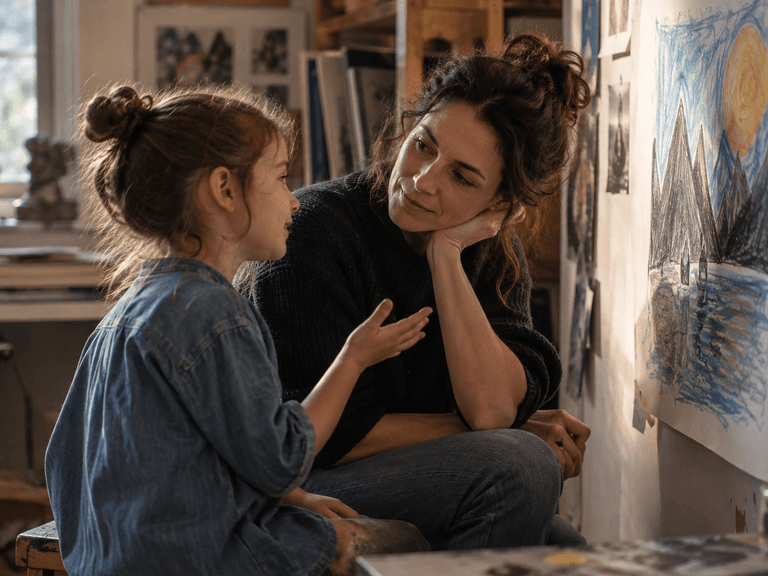
Talking about art can help children move beyond seeking approval and start thinking about choices, ideas and possibilities.
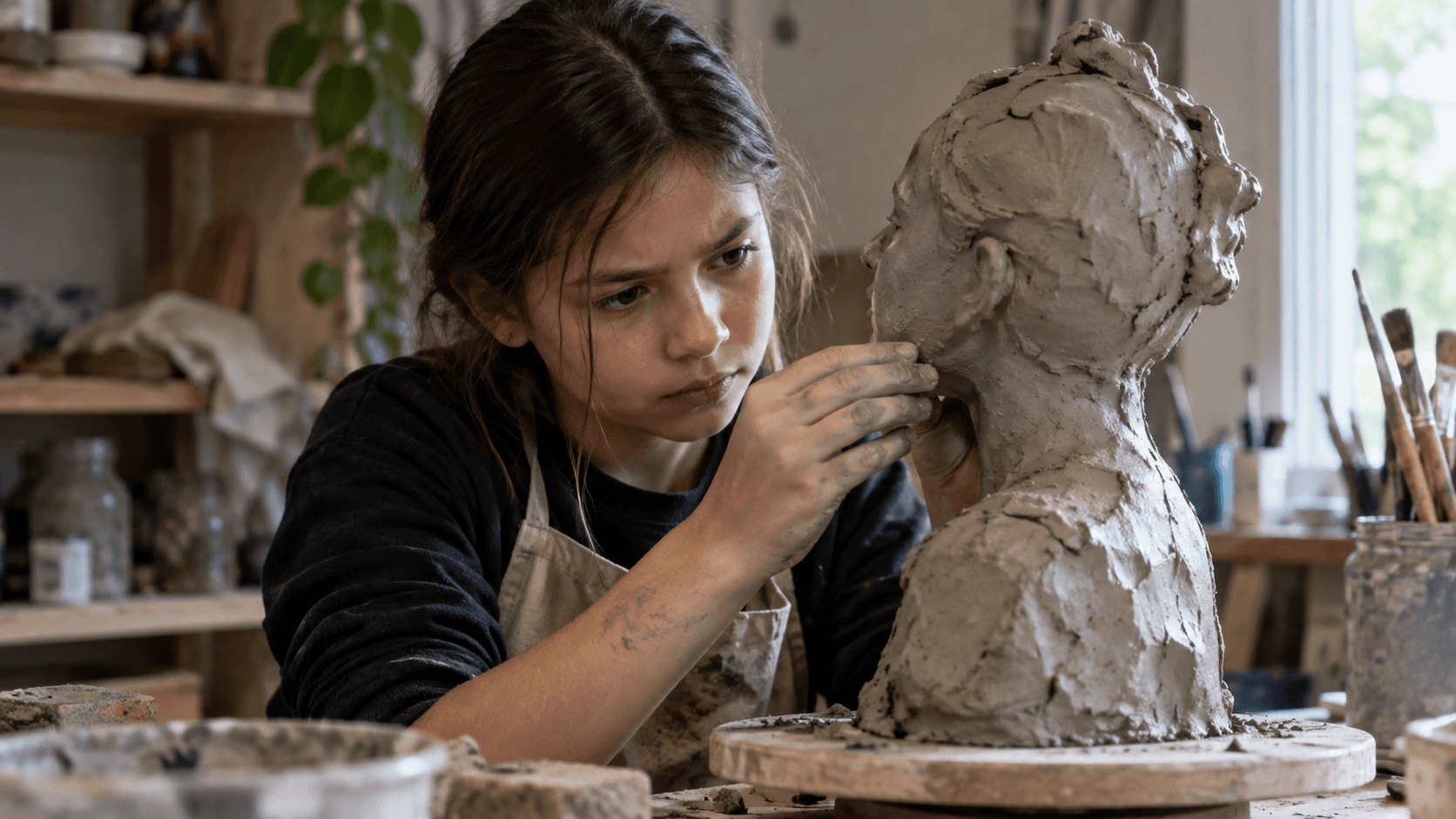
When children encounter a creative problem and stay with it, they practise something art teachers value deeply: engagement and persistence.
By ORACLES STUDIOS ·
There is a moment in almost every art class when a child looks at the page and says:
“I can't do it.”
Adults recognize the temptation.
Draw it for them.
Fix the shape.
Show exactly where the line should go.
Problem solved.
Except perhaps the most useful part of the lesson has just arrived.
In art, children regularly encounter problems without one obvious answer. The colour is wrong. The proportion feels strange. The clay keeps collapsing. The idea in their imagination does not look the same on paper.
Harvard's Studio Thinking framework calls one of the important habits developed through art Engage & Persist.
Persistence here does not mean forcing a child to repeat something endlessly.
It means learning to stay with a meaningful problem long enough to try another approach.
A teacher might ask:
The frustration does not disappear, but the child gains some ownership over the next move.
Over time, something subtle happens.
“I can't do it” can become “I haven't figured it out yet.”
That mindset is useful far beyond drawing or painting.
Art provides a relatively safe place to practise it because many artistic problems allow multiple solutions. A mistake can become texture. A torn piece of paper can become collage. An unexpected colour can change the direction of the entire work.
Children do not need adults to rescue every imperfect artwork.
Sometimes they need enough support to discover that they can rescue it themselves.
ART · 11 September 2026
Talking about art can help children move beyond seeking approval and start thinking about choices, ideas and possibilities.
ART · 11 September 2026
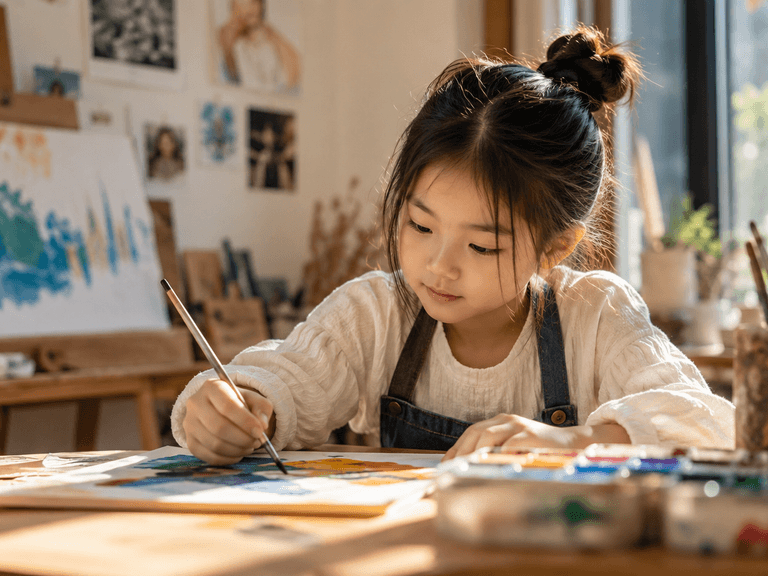
Creative freedom works best when children have enough structure to begin and enough freedom to make the work their own.
ART · 11 September 2026
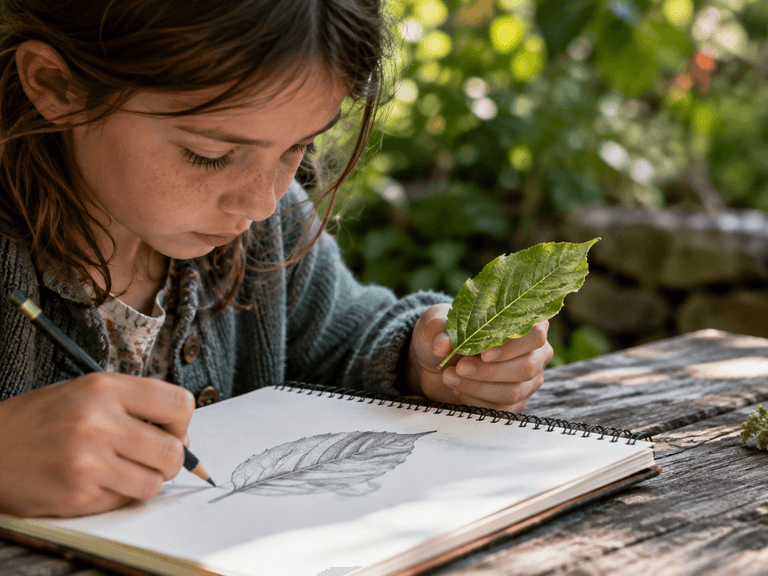
Observation is one of the quiet skills art develops: learning to slow down, look again and notice what was missed the first time.