
ART · 11 September 2026
Five Better Questions Than “Is My Drawing Good?”
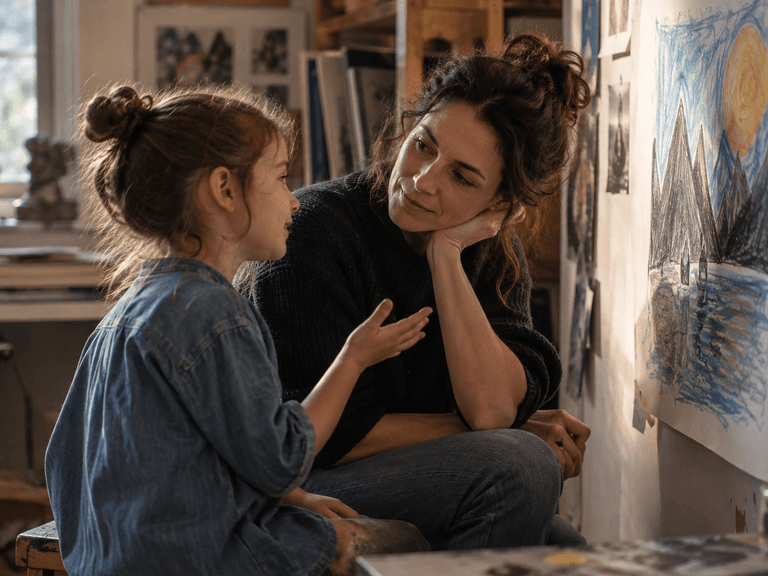
Talking about art can help children move beyond seeking approval and start thinking about choices, ideas and possibilities.
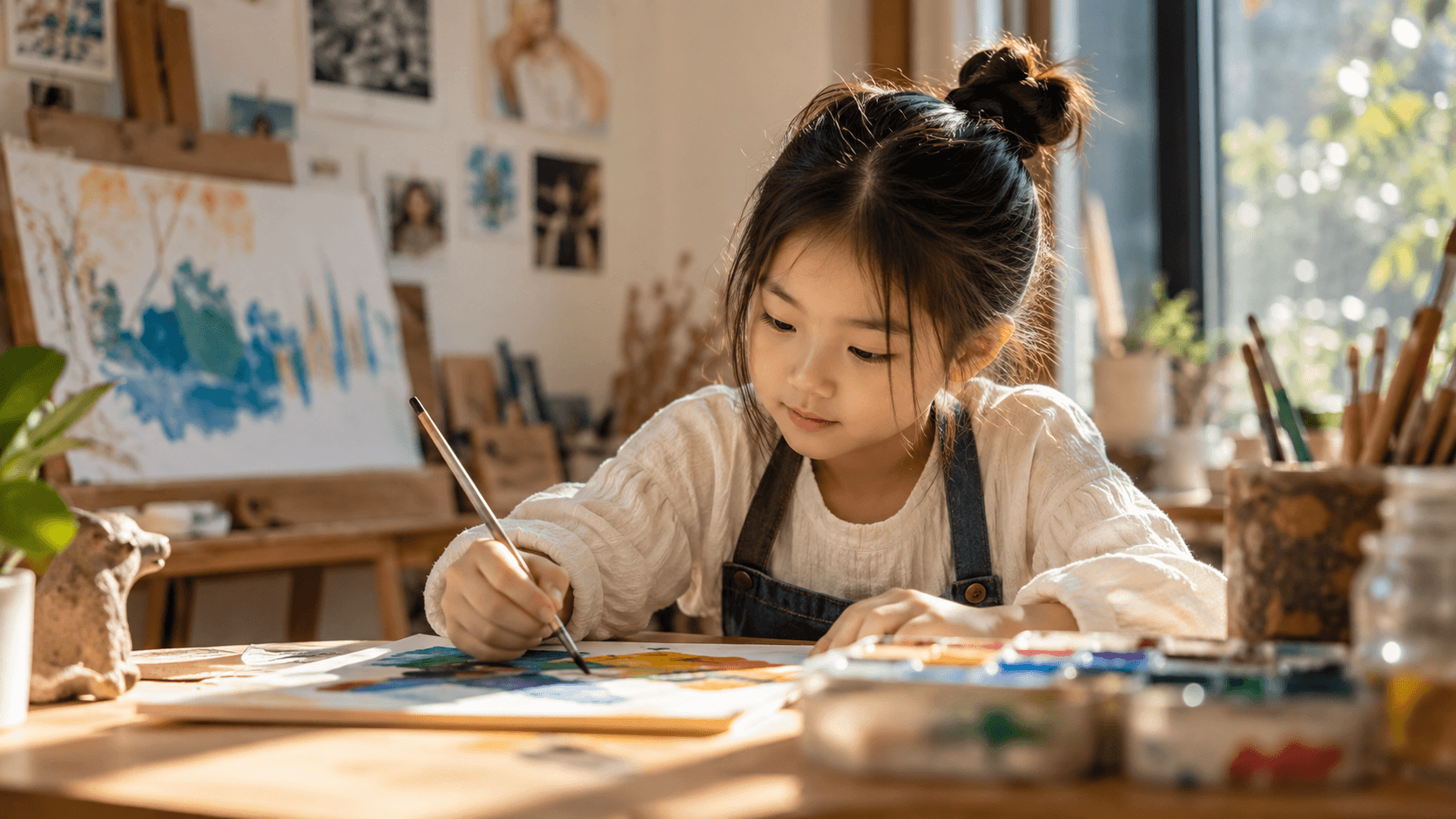
Creative freedom works best when children have enough structure to begin and enough freedom to make the work their own.
By ORACLES STUDIOS ·
There are two easy extremes in children's art activities.
At one end, every child follows the same demonstration and finishes with almost the same picture.
At the other, materials are placed on a table and the instruction is simply, “Do anything.”
Neither automatically creates meaningful creativity.
Open-ended art works best somewhere in between.
A teacher may define a material, technique, theme or problem while leaving important decisions to the student.
For example:
“Create an imaginary city using only geometric shapes.”
There is structure: city, shapes, composition.
But no two cities need to look alike.
One student builds towers. Another makes underground tunnels. Someone else creates a city floating in the sky.
Project Zero describes artistic habits such as Envision and Stretch & Explore: imagining possibilities, experimenting and taking creative risks.
Those habits need room.
If every important decision has already been made by an adult, there is little left for the child to envision.
But freedom without guidance can also be overwhelming, particularly for beginners.
Good teaching supplies tools without supplying every answer.
It teaches how paint behaves, how scissors are handled safely, how shapes can be combined and how artists can plan.
Then it asks the child:
“What will you do with that?”
The goal is not chaos.
It is authorship.
A child should be able to look at an artwork and feel that somewhere inside it is a decision that belongs to them.
ART · 11 September 2026
Talking about art can help children move beyond seeking approval and start thinking about choices, ideas and possibilities.
ART · 11 September 2026
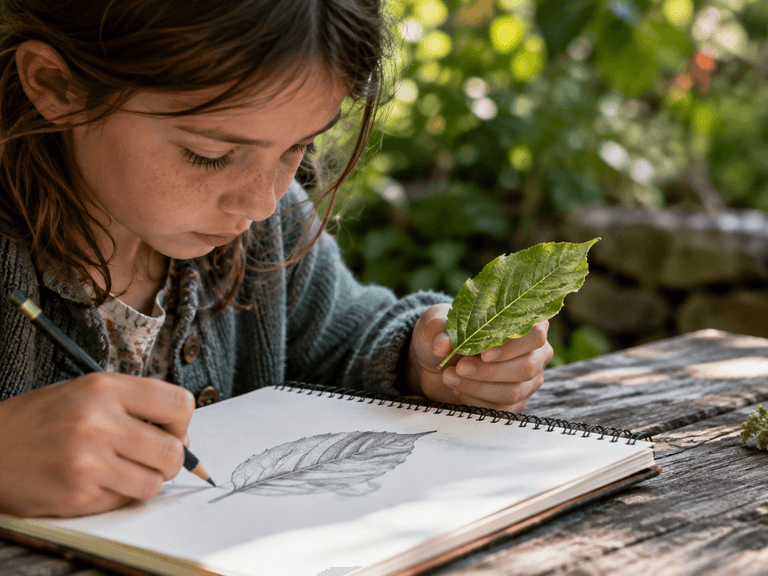
Observation is one of the quiet skills art develops: learning to slow down, look again and notice what was missed the first time.
ART · 11 September 2026
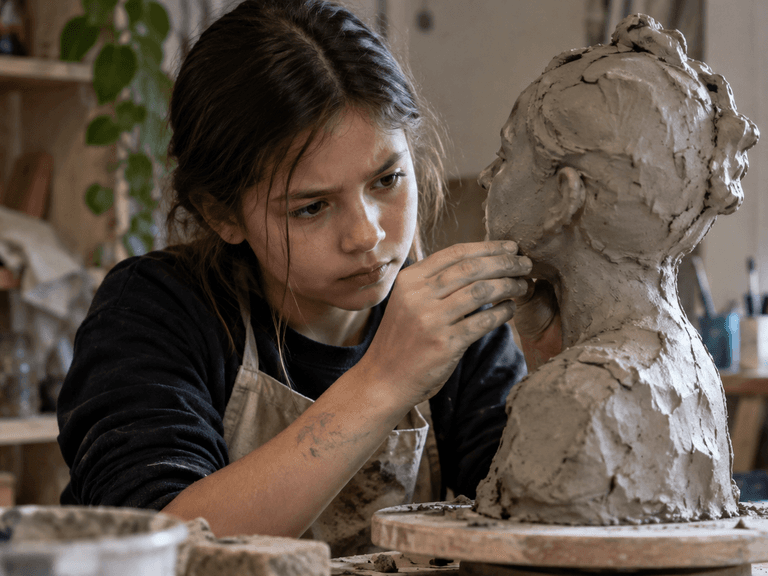
When children encounter a creative problem and stay with it, they practise something art teachers value deeply: engagement and persistence.