ART · 11 September 2026
Five Better Questions Than “Is My Drawing Good?”
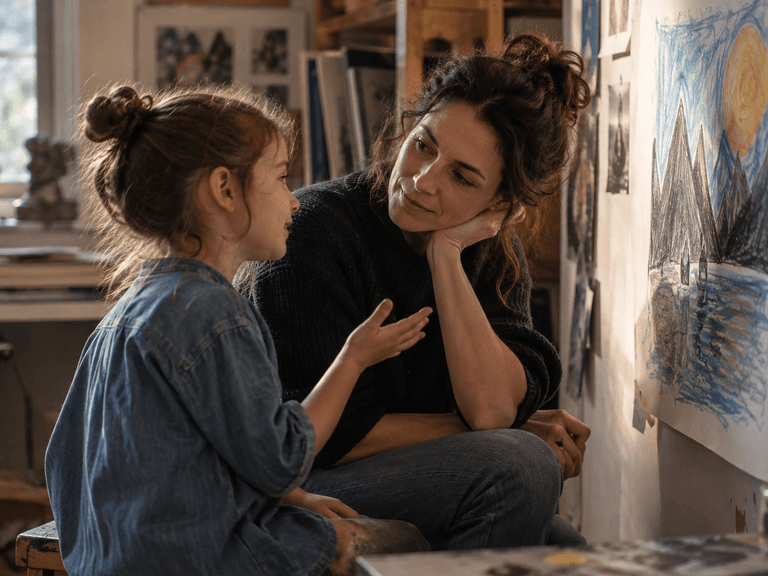
Talking about art can help children move beyond seeking approval and start thinking about choices, ideas and possibilities.
Observation is one of the quiet skills art develops: learning to slow down, look again and notice what was missed the first time.
By ORACLES STUDIOS ·
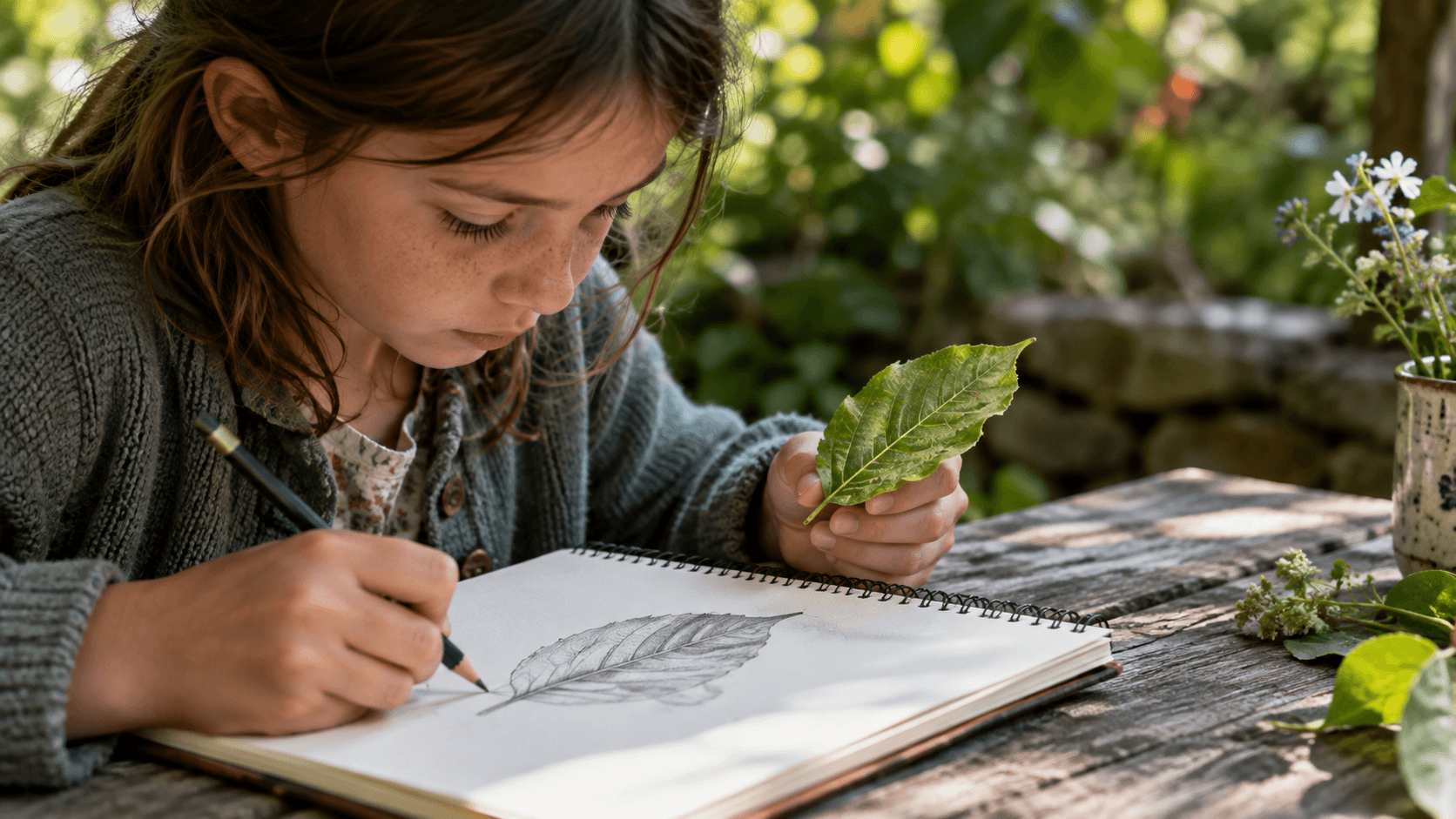
Ask a child to draw a leaf from memory.
You may get a familiar green shape with a line through the middle.
Now place a real leaf on the table.
Look closely.
Suddenly the leaf becomes much more interesting.
Observation is one of the habits emphasized in Studio Thinking. Artists learn to look closely and notice things that are easy to overlook.
This is not only a technique for realistic drawing.
It changes the relationship between the child and the subject.
Instead of drawing the idea of “a flower,” a student begins seeing this particular flower.
Instead of assuming both eyes sit exactly the same way in a portrait, they compare shapes, shadows and angles.
A useful art lesson therefore does not always begin with instructions.
Sometimes it begins with silence.
Look for thirty seconds.
What do you notice?
Look again.
What did you miss?
The first answer might be “It's brown.”
The fifth may be “The shadow is actually purple near the edge.”
That is artistic learning happening in real time.
In a world where images flash past us in seconds, art gives children permission to stay with one thing long enough to really see it.
The pencil comes later.
ART · 11 September 2026
Talking about art can help children move beyond seeking approval and start thinking about choices, ideas and possibilities.
ART · 11 September 2026
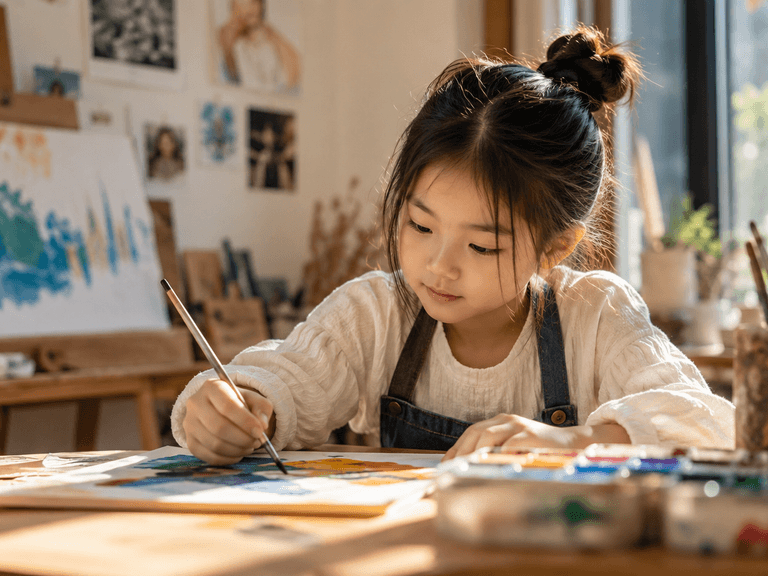
Creative freedom works best when children have enough structure to begin and enough freedom to make the work their own.
ART · 11 September 2026
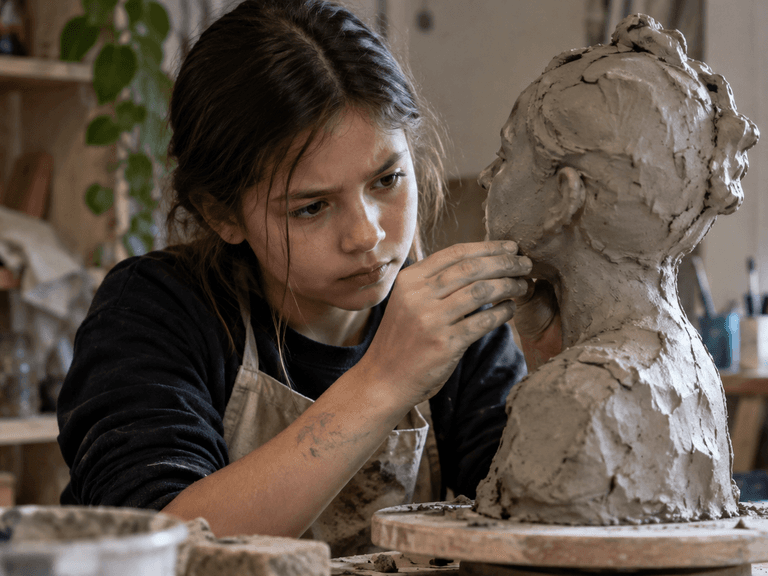
When children encounter a creative problem and stay with it, they practise something art teachers value deeply: engagement and persistence.